
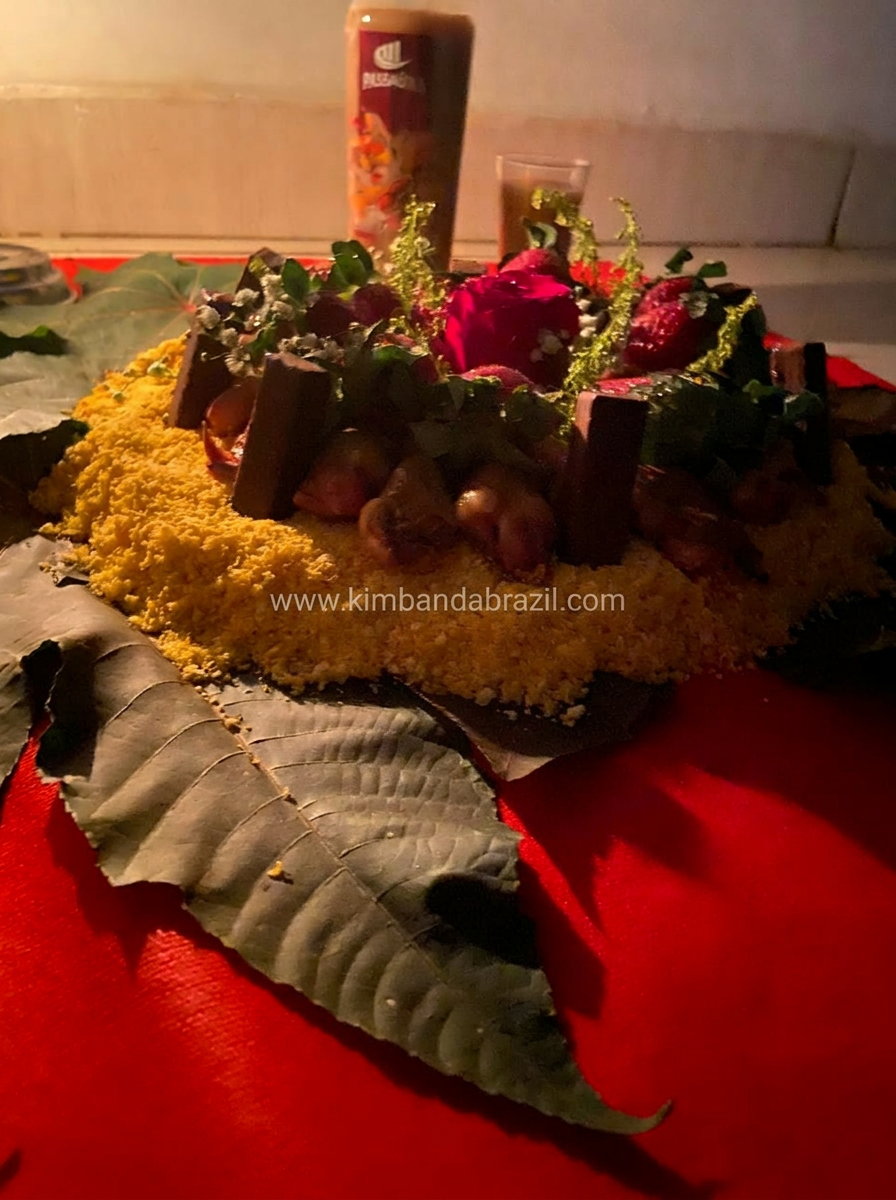
Is Brazilian Kimbanda Black Magic? My Personal Experience After Two Years of Practice
Why Do So Many People Believe Kimbanda Is Black Magic?
If you search for Brazilian Kimbanda online, you will quickly notice one recurring question: Is Kimbanda black magic? Many websites, videos, and social media posts describe it as a dangerous religion dedicated to harming others. As a result, countless people become curious, while many others become afraid before learning anything about the tradition itself.
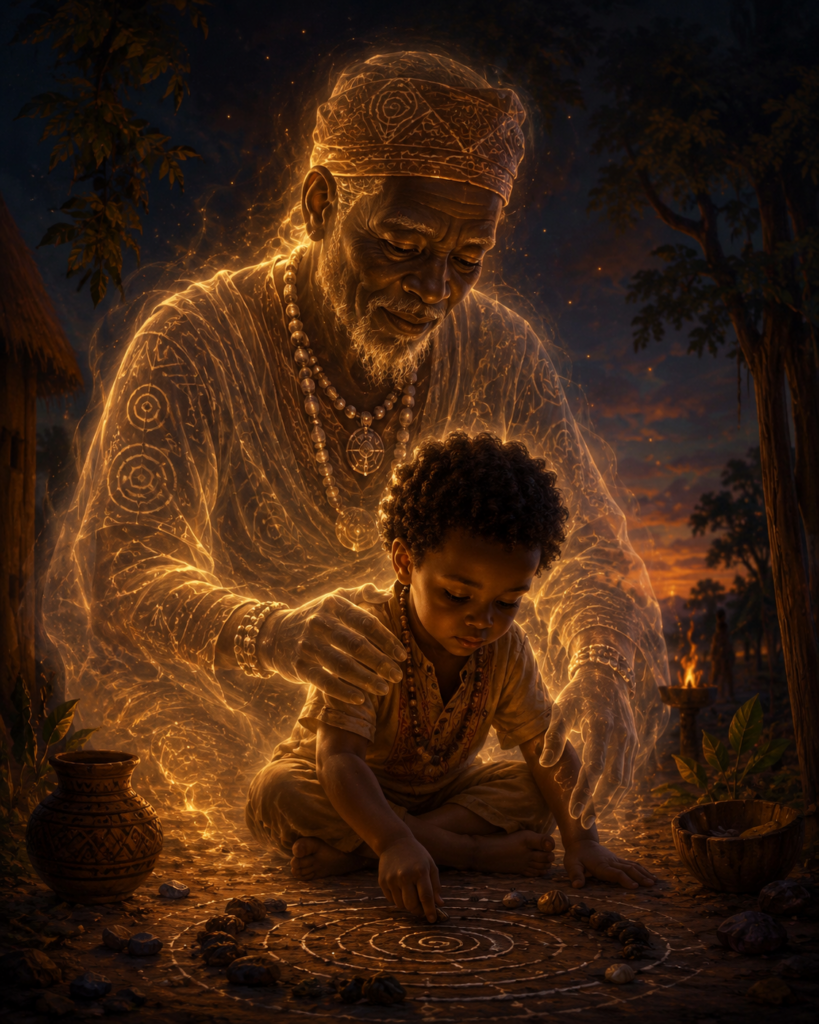
In my opinion, this misunderstanding exists because Kimbanda is still largely unknown outside Brazil. Furthermore, movies, horror stories, and sensational content on the internet often portray Afro-Brazilian religions in an exaggerated and inaccurate way. Consequently, many people judge Kimbanda without ever speaking to a practitioner or visiting a genuine Kimbanda temple.
After spending two years actively participating in a Brazilian Kimbanda house, I reached a very different conclusion. My experience simply did not match the frightening image that many people describe online.
What Is Brazilian Kimbanda?
Brazilian Kimbanda is an Afro-Brazilian spiritual tradition centered on the relationship between practitioners and ancestral spirits known as Exú and Pombagira. Although many people immediately associate these names with evil, that interpretation usually comes from cultural prejudice rather than direct experience.
Like many religions, Kimbanda includes prayers, offerings, songs, rituals, personal discipline, and spiritual guidance. However, reducing the entire religion to the expression “black magic” ignores its complexity and its cultural history.
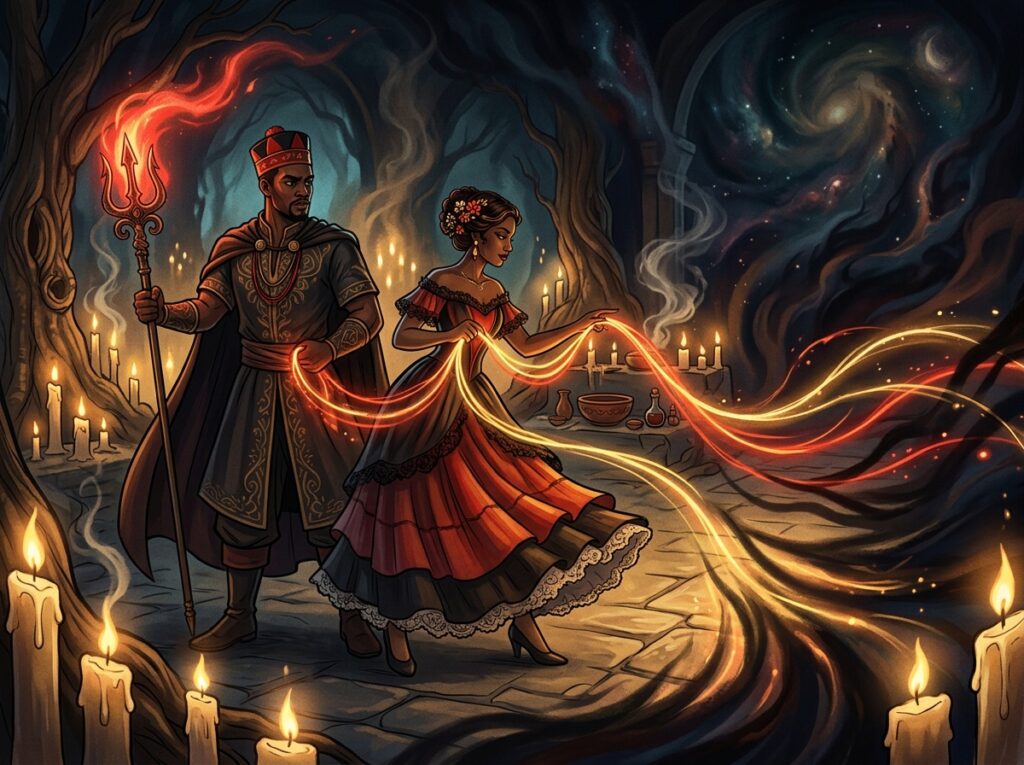
Of course, every religion has people who misunderstand its teachings or misuse its practices. Nevertheless, judging an entire spiritual tradition by isolated examples is neither fair nor accurate.
For that reason, I believe it is important to distinguish popular myths from personal experience.
If you are new to this religion, I recommend reading my complete guide about what Brazilian Kimbanda really is before continuing. Clique here.
My Experience Inside a Kimbanda Temple
For two years, I attended a Brazilian Kimbanda house regularly. Before joining, I had many questions and even a few concerns because I had heard the same stories that circulate on the internet.
However, what I found surprised me.
I did not witness anything that seemed bizarre, terrifying, or outside ordinary religious life. Instead, I met people who were struggling with everyday problems just like anyone else.
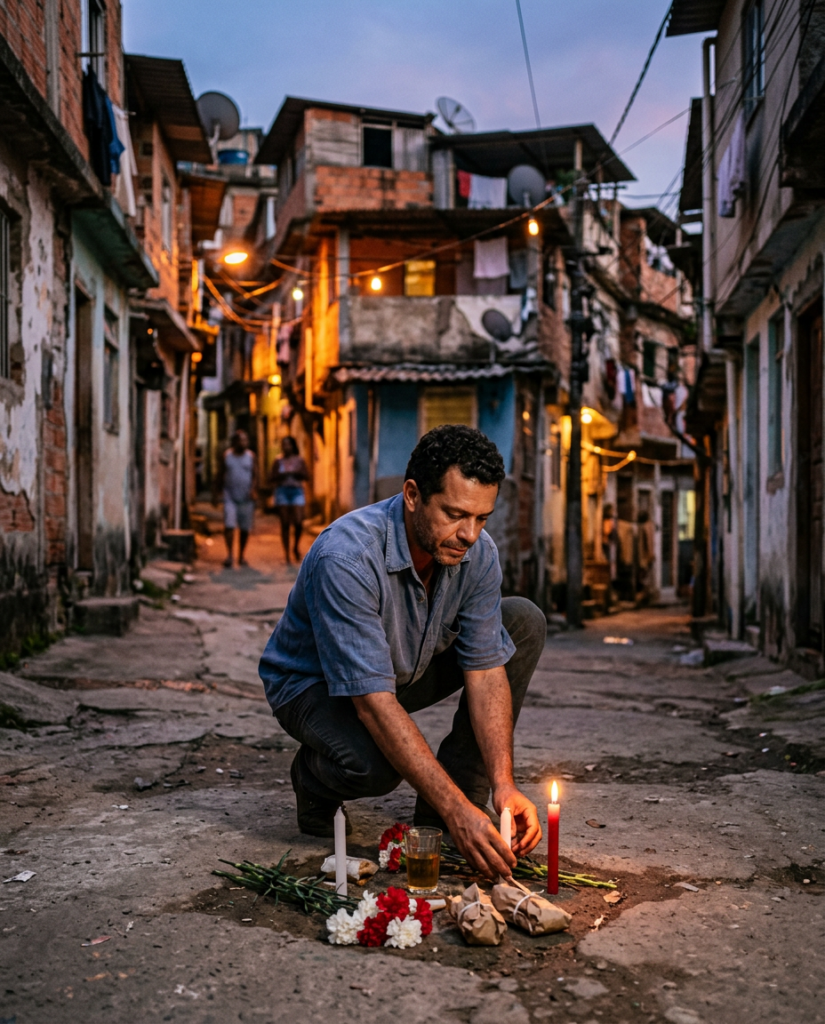
Some wanted to improve their financial situation.
Others hoped to restore damaged relationships.
Several people searched for emotional healing after painful experiences.
Many simply wanted to rebuild their lives.
Because of those realities, I rarely saw anyone wasting time thinking about how to harm another person. On the contrary, most people were completely focused on solving their own problems.
That observation profoundly changed the way I viewed Brazilian Kimbanda.
What People Were Really Looking For
As I became more involved in the religious community, another pattern became increasingly clear.
Most practitioners arrived carrying heavy emotional burdens.
Some had lost their jobs.
Others were facing serious family conflicts.
Many were experiencing heartbreak, anxiety, financial difficulties, or uncertainty about the future.

Naturally, those concerns occupied nearly all of their attention.
Instead of discussing revenge or harming others, people spent their time praying, seeking guidance, participating in rituals, and trying to rebuild their own lives with dignity.
In my opinion, this reality is completely different from the image often presented online.
That does not mean every individual is perfect. Obviously, every religion includes people with different personalities and different motivations. However, based on my own experience, I can honestly say that I encountered far more people searching for hope than people searching for revenge.
For me, that difference is extremely important.
It reminds us that judging an entire religion by stereotypes often prevents us from understanding the real people behind those beliefs.
Why I Believe Spiritual Justice Is Fairer Than Human Judgment
One lesson became increasingly clear during my two years in Brazilian Kimbanda. In my opinion, human beings are not always capable of judging fairly. We often see only one side of a story, and our emotions can easily influence our decisions.
Because of that, I believe true justice belongs to the spiritual world rather than to human beings.
Personally, I believe that if someone genuinely deserves justice, the spiritual world will respond in the appropriate way. Sometimes that response may favor a person. At other times, it may work against them. However, I do not believe it is my role to decide who deserves punishment or reward.
For that reason, I never viewed Kimbanda as a religion that encourages hatred or revenge. Instead, I came to understand it as a spiritual path that teaches responsibility, respect, and accountability for one’s own actions.
Naturally, not everyone will agree with this perspective. Nevertheless, it reflects the conclusion I reached after participating in a Kimbanda house and observing the people around me.
Discover Exú Mirim, the little great warrior of Brazilian Kimbanda. Click here.
Is Every Kimbanda Ritual Intended to Harm Someone?
One of the biggest myths surrounding Brazilian Kimbanda is the belief that every ritual exists to hurt another person.
Based on my own experience, I do not believe that is true.
During the two years I spent participating in a Kimbanda temple, I saw people requesting spiritual help for many different reasons.
Some wanted better job opportunities.
Others prayed for emotional healing after difficult relationships.
Many asked for protection, prosperity, health, or guidance during challenging moments in their lives.
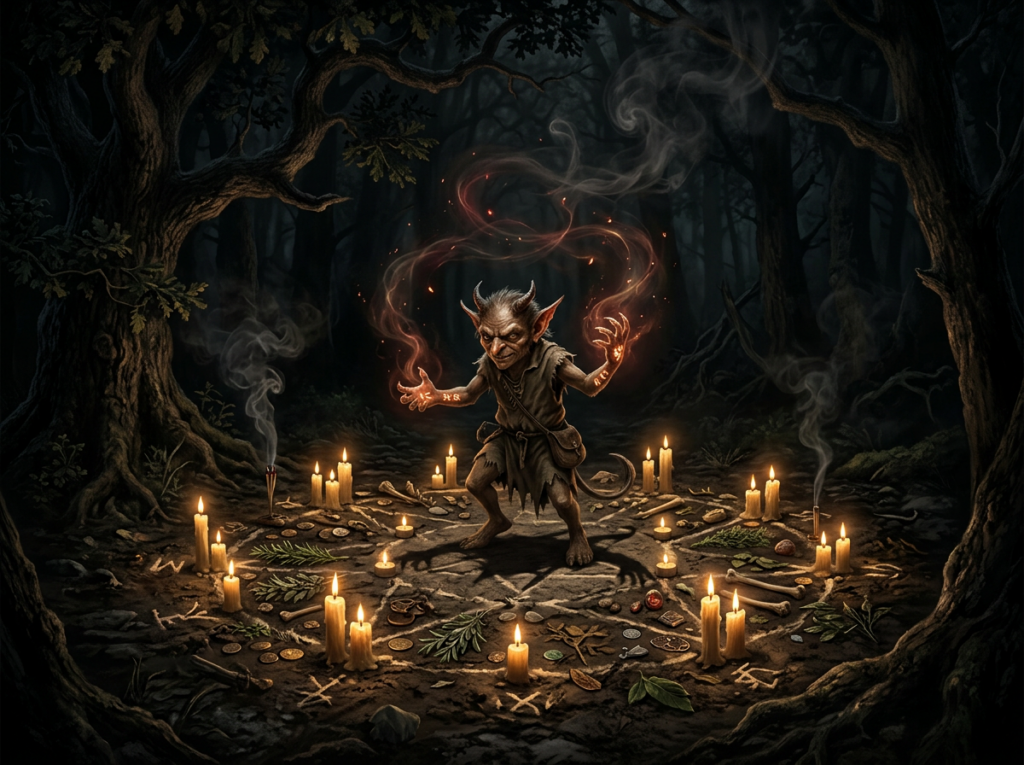
Of course, I understand why outsiders may have questions. After all, Kimbanda is frequently portrayed in movies, television, and social media as something mysterious or dangerous.
However, real life is usually much less dramatic than internet stories.
That is precisely why I believe personal experience matters.
It is easy to repeat stereotypes.
It is much harder to spend time inside a religious community, observe people respectfully, and form an opinion based on direct experience rather than fear.
My Personal Opinion After Two Years of Practice
After participating in Brazilian Kimbanda for two years, my understanding changed completely.
Before entering a Kimbanda house, I had many of the same doubts that other people have today. Nevertheless, those doubts gradually disappeared as I became familiar with the daily reality of the religion.
What impressed me most was not mysterious rituals or frightening ceremonies.
Instead, it was the determination of ordinary people trying to rebuild their lives.
I met people who wanted stable jobs.
I met parents worried about their children.

I met couples hoping to repair broken relationships.
I met individuals searching for emotional peace after years of suffering.
Very few people seemed interested in destroying someone else’s life.
Instead, almost everyone was trying to improve their own.
That reality completely changed the way I understand Brazilian Kimbanda.
Final Thoughts
So, is Brazilian Kimbanda black magic?
Based on my personal experience, my answer is no.
I understand why many people ask that question. Unfortunately, misinformation about Afro-Brazilian religions has existed for generations. Consequently, myths often spread much faster than real experiences.
My purpose is not to convince everyone to share my beliefs. Instead, I simply encourage people to seek reliable information before judging an entire spiritual tradition.
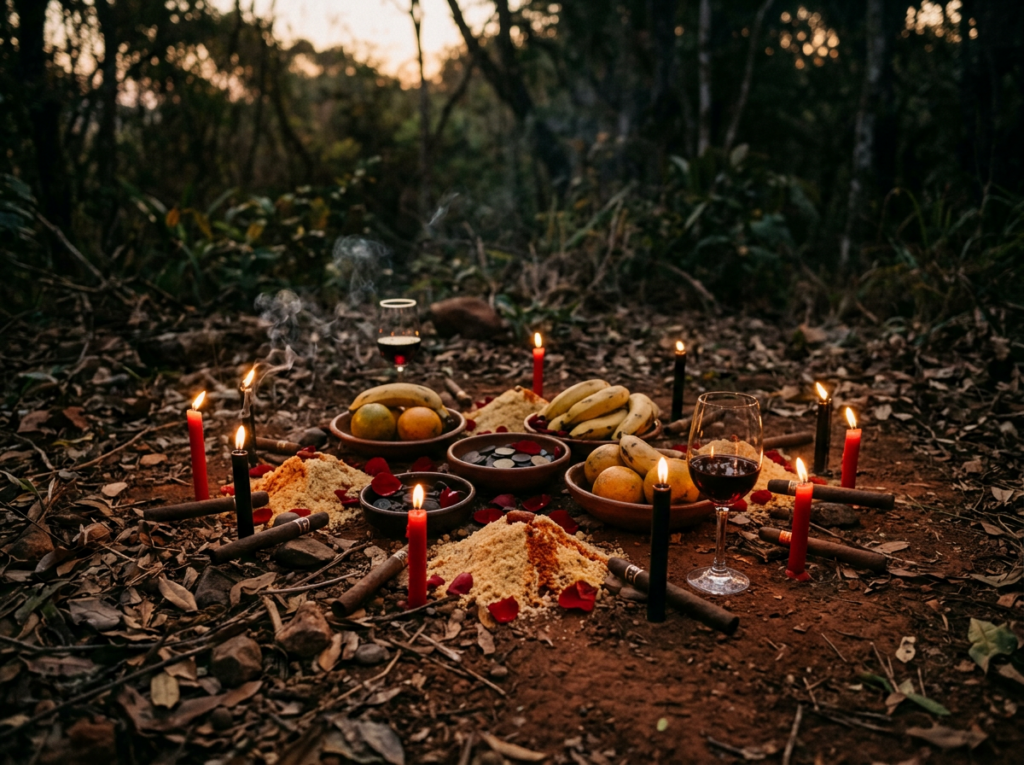
For me, Brazilian Kimbanda became a place where I learned discipline, responsibility, patience, and respect for spirituality.
More importantly, I learned that most people who seek spiritual help are not trying to ruin someone else’s life.
They are simply trying to rebuild their own.
Curious about prosperity baths? Click here to learn more.
Want to see real spellwork? Visit my Instagram to explore photos of my rituals, offerings, and spiritual practices. Follow me today!
Frequently Asked Questions
Is Brazilian Kimbanda considered black magic?
Many people describe it that way. However, based on my personal experience, that definition does not accurately represent the religion or the people I met during my two years of practice.
Is Kimbanda only about rituals?
No. In my experience, personal responsibility, discipline, spiritual growth, and self-improvement are just as important as ritual practice.
Why do so many people misunderstand Kimbanda?
Movies, sensational videos, and misinformation on the internet have shaped public opinion for many years. As a result, many people form opinions without ever learning from practitioners.
Can someone practice Kimbanda for personal growth?
Based on my experience, yes. Many practitioners seek guidance, emotional healing, protection, prosperity, and greater spiritual understanding rather than conflict with other people.
What was the biggest lesson you learned?
The greatest lesson I learned is that reality is often very different from stereotypes. After spending two years inside a Kimbanda house, I discovered ordinary people facing ordinary challenges while sincerely trying to build better lives.
Want to see real spellwork? Visit my Instagram to explore photos of my rituals, offerings, and spiritual practices. Follow me today!
Deixe um comentário