

Introduction: Is Karma Real?
One of the most common spiritual questions people ask is, “Does karma exist?” The concept appears everywhere in modern culture. It is discussed in books, podcasts, social media posts, religious teachings, and everyday conversations. Many people believe that karma is a universal law that ensures justice. According to this belief, good actions eventually bring rewards, while bad actions eventually bring punishment.
For countless individuals, this idea is comforting. It suggests that the universe is ultimately fair, even when life appears unfair. If a dishonest person succeeds, karma will supposedly catch up with them later. Likewise, if a good person suffers, karma is often used to explain why. The belief creates a sense of order in a world that often seems chaotic and unpredictable.
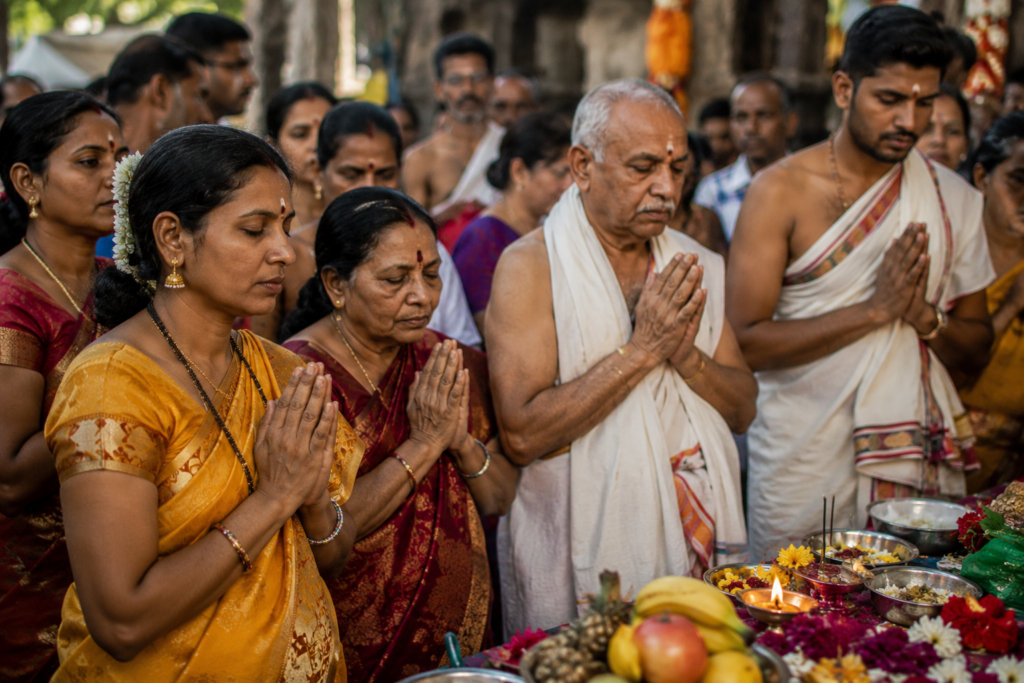
However, after years of spiritual exploration and observation, I have reached a different conclusion. I do not believe karma exists as a cosmic system of justice. While I understand why so many people are attracted to the idea, I find the evidence unconvincing. More importantly, I believe that karma can sometimes function as a tool of fear, social control, and spiritual conformity.
From a Kimbanda perspective, reality appears far more complex than the popular concept of karma suggests. Life does not seem to operate according to a universal moral accounting system. Instead, it unfolds through countless interactions involving power, desire, opportunity, chance, responsibility, and personal choice.
As a result, I remain skeptical of the claim that karma governs human destiny.
What Does Karma Mean?
Before discussing whether karma is real, it is important to understand what the term generally means.
The word karma originated in ancient Indian spiritual traditions and is commonly associated with the idea that actions produce consequences. Over time, different religions and philosophies have interpreted karma in different ways. Nevertheless, the modern Western understanding is usually much simpler.
Today, many people use the word karma to describe a universal force that rewards good behavior and punishes bad behavior. If someone acts selfishly, karma will eventually make them suffer. Conversely, if someone acts kindly, karma will eventually reward them.

In other words, karma has become a popular explanation for justice.
This interpretation is appealing because it reassures people that no action goes unnoticed. Even if human courts fail, karma is expected to restore balance. Furthermore, even if corruption remains unpunished, karma is believed to be working behind the scenes.
Yet this raises an important question: if karma and justice are inseparable, why does the world so often appear unjust?
The Appeal of the Law of Karma
The law of karma remains popular because it satisfies a deep psychological need.
Human beings naturally want to believe that the world makes sense. We want to believe that good people will ultimately prosper and that bad people will eventually face consequences. Consequently, the idea of karma provides a framework that transforms uncertainty into certainty.
Furthermore, karma offers emotional comfort. When people witness injustice, they do not have to accept that life can be unfair. Instead, they can trust that an invisible spiritual mechanism will eventually correct every imbalance.

For many people, this belief reduces anxiety. It provides hope during difficult times and reassurance when justice seems absent.
Nevertheless, emotional comfort does not necessarily prove that a belief is true.
History is filled with ideas that were comforting but inaccurate. Therefore, the popularity of karma does not automatically demonstrate its existence.
Does Karma Exist in the Real World?
When I examine the world around me, I struggle to find convincing evidence that karma operates as a universal law.
Consider politics. Across the globe, countless political figures have been accused of corruption, bribery, fraud, and abuse of power. Some are exposed and punished. However, many continue to enjoy wealth, influence, and privilege throughout their lives.

If karma exists as a perfect system of justice, why do so many individuals involved in corruption appear to prosper?
This pattern is not limited to politics. It can also be observed in business, entertainment, and other areas of society. Some people achieve tremendous success through manipulation, dishonesty, exploitation, or unethical behavior. Meanwhile, many hardworking and honest individuals struggle financially despite their integrity.
Of course, supporters of karma often respond by claiming that consequences will arrive later. If not in this lifetime, then perhaps in another.
However, this explanation creates a problem. If karmic consequences can always be postponed indefinitely, how can anyone verify that karma is actually occurring?
Ultimately, the answer becomes increasingly difficult to establish.
The Problem With Karmic Explanations
One reason I remain skeptical is that karma can be used to explain virtually anything.
When a good person succeeds, believers often credit karma.
Conversely, when a good person suffers, karma is frequently blamed on actions from a previous life.
Likewise, a dishonest person’s failure is often interpreted as karmic justice.
Meanwhile, when a dishonest person prospers, supporters of karma usually argue that consequences have simply been delayed.

As a result, every possible outcome becomes evidence for the same belief.
This creates a circular system of reasoning. Because no event can disprove karma, the concept becomes impossible to test objectively.
Consequently, karma often functions more like a belief system than a reliable description of reality.
A spiritual principle should help illuminate reality. It should not become so flexible that every imaginable event automatically confirms it.
Karma and Justice: A Difficult Relationship
At first glance, karma and justice seem inseparable. In fact, many people believe in karma precisely because they desire justice.
However, the more closely we examine reality, the more difficult this connection becomes.
Justice implies consistency. Similar actions should produce similar consequences. Yet human experience rarely reflects such predictability.
Throughout history, innocent people have suffered immensely while cruel individuals have enjoyed power and prosperity. In addition, entire populations have endured wars, famines, oppression, and disasters despite having done nothing to deserve such experiences.
Supporters of karmic debt often argue that hidden causes from previous lives explain these situations. Yet such explanations rely on assumptions that cannot be demonstrated.
Therefore, karma and justice may be more closely connected to human hopes than to observable reality.
Karma as a Tool of Fear
Beyond questions of evidence, I believe karma can also become a mechanism of fear.
Many spiritual systems teach that every thought, word, and action contributes to one’s karmic future. As a result, individuals may begin monitoring themselves constantly.
First, they become afraid of making mistakes.
In addition, they may become afraid of expressing certain emotions.
Eventually, they can become afraid of pursuing desires that society considers inappropriate.
Over time, this fear can influence nearly every aspect of their decision-making process.
Instead of living authentically, they focus on avoiding karmic punishment.
Consequently, fear replaces self-discovery.
Rather than asking, “What do I genuinely want?” people begin asking, “What am I allowed to want?”
This shift can have profound psychological consequences.
How Karma Can Encourage Conformity
In many communities, karma functions as a powerful form of social regulation.
People are taught that questioning accepted values may generate negative karmic consequences. Certain emotions are discouraged. Certain ambitions are condemned. Certain desires are treated as spiritually dangerous.
As a result, conformity becomes associated with spiritual safety.
Meanwhile, authenticity becomes risky.
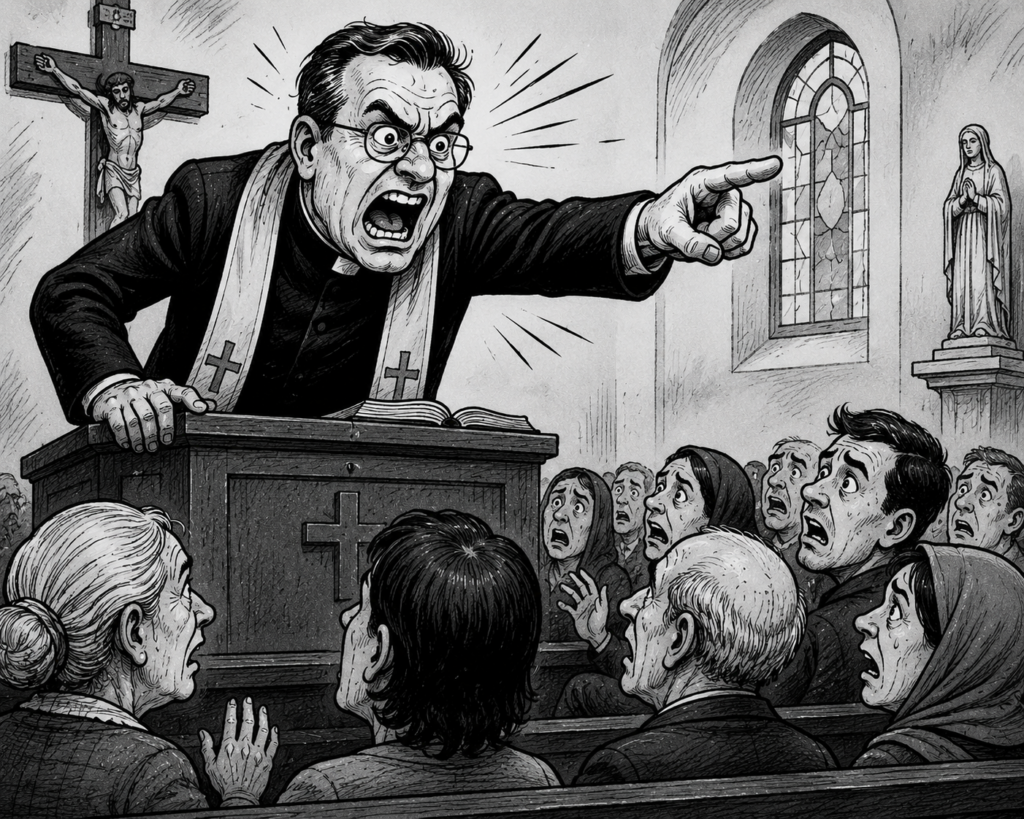
This dynamic can discourage individuals from exploring aspects of themselves that fall outside socially approved categories.
Instead of understanding their true nature, they learn to perform moral behavior for fear of punishment.
Consequently, spiritual growth may become secondary to social obedience.
The Importance of Authentic Human Experience
Human beings are complex creatures.
We experience love, anger, attraction, ambition, jealousy, compassion, frustration, generosity, and countless other emotions. Some of these qualities are celebrated by society, while others are condemned.
However, denying the existence of certain emotions does not eliminate them.
In fact, repression often creates greater problems.

When individuals suppress natural aspects of themselves because they fear karmic consequences, those aspects frequently emerge in distorted ways. As a result, what remains hidden often gains power.
Therefore, genuine self-knowledge requires honesty.
Instead of pretending that uncomfortable emotions do not exist, we can examine them directly and learn from them.
Although this approach may be more challenging, it is often more authentic.
A Kimbanda Perspective on Spiritual Reality
Kimbanda offers a perspective that differs significantly from many karma-centered belief systems.
As an initiatory ancestral tradition, Kimbanda does not generally revolve around the idea of universal moral judgment. Instead, it emphasizes spiritual relationships, practical wisdom, personal responsibility, and direct engagement with reality.
From this perspective, existence is not necessarily divided into simple categories of good and evil.
Life is more complicated than that.
Human beings possess conflicting desires, competing interests, and diverse motivations. Therefore, spiritual development involves understanding these realities rather than denying them.
Consequently, the focus shifts away from cosmic punishment and toward self-awareness.
Exus and Pombagiras Are Often Viewed as Amoral
One of the most misunderstood aspects of Kimbanda involves the nature of Exus and Pombagiras.
Many people assume that spiritual entities must function as moral authorities. They expect spirits to reward virtue and punish wrongdoing according to a universal ethical framework.
However, many practitioners understand Exus and Pombagiras differently.
They are often viewed as amoral rather than immoral.
This distinction is extremely important.

Immoral suggests opposition to morality.
By contrast, amoral suggests indifference to morality.
In other words, these spiritual forces are not necessarily concerned with enforcing the moral expectations created by religious institutions or social norms.
Instead, they engage with reality as it exists.
This perspective does not require a belief in karmic punishment or karmic rewards.
Want to learn how to prepare a herbal bath? Click here.
Responsibility Without Karma
Critics sometimes assume that rejecting karma means rejecting responsibility.
I disagree completely.
Personal responsibility does not depend on the existence of a cosmic accounting system.
Actions have consequences because people live within relationships, communities, institutions, and social structures.
For example, a dishonest person may lose trust.
Likewise, a manipulative person may damage valuable relationships.
Similarly, an irresponsible person may create obstacles for themselves.
These outcomes occur naturally.
They do not require supernatural punishment.
Therefore, rejecting the law of karma does not mean embracing chaos. Instead, it means recognizing that consequences arise through real-world interactions rather than through an invisible moral mechanism.
Why the World Appears Morally Neutral
When I observe reality, I see a world that often appears morally neutral.
On some occasions, good people succeed.
Nevertheless, they may also experience failure.
Meanwhile, dishonest individuals sometimes prosper.
Yet they can also encounter hardship.
There is no obvious pattern suggesting that a universal force consistently distributes rewards and punishments according to moral worth.
Instead, life appears shaped by countless variables, including opportunity, intelligence, social circumstances, timing, resources, relationships, and personal choices.
This observation may seem uncomfortable. However, it may also be more honest.
The universe does not appear obligated to satisfy human expectations of fairness.
Freedom Beyond the Fear of Karma
Ironically, abandoning belief in karma can create greater freedom.
Without the constant fear of karmic consequences, individuals may feel more comfortable exploring their authentic nature.
As a result, individuals can evaluate their desires more honestly.
Furthermore, they can examine their motivations without the burden of automatic guilt.
Ultimately, they can make conscious choices based on understanding rather than fear.

Moreover, they become responsible for creating meaning rather than relying on a cosmic system to provide it.
This does not eliminate ethics.
Rather, it encourages people to develop ethics intentionally instead of accepting them unquestioningly.
As a result, personal growth becomes a matter of awareness rather than obedience.
Is Karma Real or Just a Belief?
Ultimately, the question remains: is karma real?
For many people, the answer will always be yes.
For others, the answer will always be no.
Personally, I see karma primarily as a belief—a powerful idea that offers comfort, structure, and meaning to those who embrace it.
However, I do not see convincing evidence that karma operates as an objective law governing the universe.
Instead, I see a world filled with complexity, unpredictability, and moral ambiguity.
For example, politicians involved in corruption often continue to thrive.
At the same time, many good people face tremendous challenges.
Consequently, the world rarely appears to reflect a perfectly balanced system of cosmic justice.
Therefore, I remain unconvinced that karma exists in the way it is commonly described.
Looking for an attraction and seduction bath? Click here.
Conclusion: Why I Remain Skeptical of Karma
The question “Does karma exist?” will likely continue to inspire debate for generations.
For many people, karma represents hope. It represents the belief that justice ultimately prevails and that every action receives an appropriate response.
Yet my own observations have led me elsewhere.
When I examine history, politics, society, and human behavior, I do not see persuasive evidence of a universal system of karmic justice. Instead, I see a reality that is often indifferent to human ideas of fairness.
From my perspective, karma frequently functions as a comforting belief, a source of fear, and sometimes a mechanism of social control that encourages conformity over authenticity.
Kimbanda offers a different lens through which to view existence. Rather than focusing on cosmic punishment and reward, it emphasizes self-knowledge, responsibility, spiritual relationships, and direct engagement with reality. Within this perspective, Exus and Pombagiras are often understood as amoral spiritual forces rather than judges enforcing human moral standards.

Whether one agrees with this view or not, it invites an important reflection.
Perhaps the most meaningful spiritual question is not whether karma will punish us.
Instead, the more important question may be whether we truly know ourselves, our desires, our motivations, and our place in the world.
For me, that question remains far more valuable than the promise of karmic justice.
Want to learn more about Exu and Pombagira? Click here.
Deixe um comentário